
You're tired… but your body won't relax
You go to bed exhausted.
But instead of falling asleep, your body stays tense.
Your mind keeps running.
Your breathing is shallow.
And sleep doesn't come.
This is not just a sleep issue.
At IZY.LIFE, this is often a nervous system regulation problem.
Explore sleep solutions:
Ozlo Sleepbuds Noise-Cancelling Sleep Earbuds with Smart Relaxation
What is your nervous system and why it affects sleep
Your nervous system controls how your body responds to stress.
It operates in two main modes:
- activation (fight or flight)
- recovery (rest and digest)
To fall asleep, your body must shift into recovery mode.
If it doesn't, sleep becomes difficult.
Why your nervous system stays "on" at night
Chronic stress
Your body remains activated throughout the day.
It doesn't naturally slow down at night.
Mental overload
Thinking, planning, worrying.
Your brain keeps sending signals to stay alert.
Cortisol imbalance
Stress hormones keep your system activated.
Night awakening loop
When you wake up, your system reactivates instantly.
This explains why many people wake up at 3AM and can't fall back asleep.
Signs your nervous system is affecting your sleep
- difficulty falling asleep
- waking up at night
- physical tension in bed
- shallow breathing
- feeling "tired but wired"
What actually calms your nervous system
Slow breathing
One of the fastest ways to shift your state:
- inhale 4 seconds
- exhale 6–8 seconds
Longer exhales signal safety to your body.
Reduce stimulation
Lower light, reduce noise and limit information input.
Focus on the body
Relaxation comes from physical signals, not mental control.
Target the nervous system directly
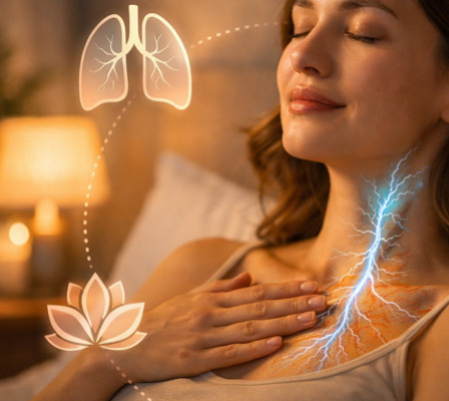
Some technologies now allow you to directly influence your nervous system, especially through vagus nerve stimulation, helping your body shift into a deep relaxation state.
Top solutions to support nervous system regulation
Understanding your recovery
Withings Sleep Analyzer
Tracks sleep quality and recovery patterns.
Reducing external stressors
Ozlo Sleepbuds
Help create a calmer sleep environment.
Acting directly on the nervous system
Pulsetto
A vagus nerve stimulation device designed to activate the parasympathetic system.
It helps calm the body, reduce stress and facilitate sleep onset.
This is one of the most direct ways to address the root cause.
Supporting internal balance
Nutrivie Ashwagandha Bio
Helps regulate stress response.
Arkopharma Arkorelax Sommeil Fort 8h
Supports relaxation and falling asleep.
Explore all solutions:
Ozlo Sleepbuds Noise-Cancelling Sleep Earbuds with Smart Relaxation
Nervous system vs other sleep approaches
| Approach | Focus | Result |
|---|---|---|
| Sleep hygiene | Environment | Limited impact |
| Supplements | Chemical support | Moderate |
| Nervous system regulation | Root cause | Long-term improvement |
IZY.LIFE focuses on addressing the root cause.
How to calm your nervous system long term
Create a daily downregulation routine
Your body needs repetition to feel safe.
Train your system to relax
Relaxation is a skill, not an automatic state.
Stay consistent
The nervous system adapts over time.
Go deeper into your sleep
Ozlo Sleepbuds Noise-Cancelling Sleep Earbuds with Smart Relaxation
The real problem isn't sleep
Sleep is the result.
Your nervous system determines:
- how you fall asleep
- how deeply you recover
- how often you wake up
Conclusion
If your body cannot relax, you cannot sleep.
Calming your nervous system is essential.
IZY.LIFE helps you restore balance, improve recovery and sleep better.
FAQ
What is the nervous system?
It controls how your body reacts to stress and relaxation.
Can stress affect sleep?
Yes, it keeps your nervous system activated.
How do I calm my body before sleep?
Slow breathing and reducing stimulation are key.
Why do I feel tired but awake?
Your body is tired, but your nervous system is still active.
How long does it take to improve?
With consistency, improvements can appear within a few weeks.