

Why You Wake Up at 3AM (And How to Fall Back Asleep Naturally)
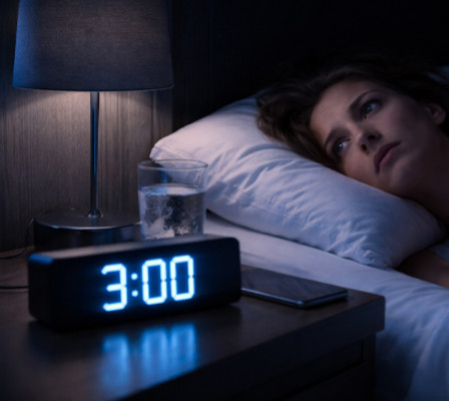
Waking up at 3AM and can’t fall back asleep?
You fall asleep without difficulty.
But then, in the middle of the night, you wake up — often at the same time, around 3AM.
Your mind becomes active.
Your body feels alert.
And going back to sleep feels difficult.
This situation is very common.
IZY.LIFE, this pattern is not considered a simple sleep issue. It is often a sign of deeper imbalance involving stress, hormones and the nervous system.
Discover the full sleep category
Why does it happen specifically at 3AM?
This timing is not random. Between 2AM and 4AM, your body naturally prepares for waking. Cortisol, the hormone responsible for alertness, starts increasing. If your internal balance is stable, you remain asleep. If not, this shift can wake you up.
The main causes of waking up at night
Elevated cortisol levels
Cortisol should be low at night.
When it stays elevated, it can trigger
- sudden awakenings
- mental alertness
- difficulty falling back asleep.
Cortisol imbalance is one of the most overlooked causes of night awakenings.
To understand this mechanism in detail
An overactive nervous system
Your body may be tired, but your nervous system remains active. This creates a state where the brain stays alert, relaxation is difficult and sleep becomes unstable. If your nervous system stays in a state of alert, your body cannot transition into deep sleep.
Blood sugar fluctuations
During the night, drops in blood sugar can trigger a stress response. Your body reacts by waking you up to restore balance.
The most common mistakes at 3AM
Certain behaviors make the situation worse:
- checking your phone
- looking at the time
- trying to force sleep
- engaging in thoughts
These actions increase brain activation and delay sleep.
What actually helps you fall back asleep
Slow breathing
A simple technique:
- inhale for 4 seconds
- then exhale for 6 to 8 seconds
This supports nervous system relaxation.
Maintain low stimulation
Avoid light and screens. Keep your environment calm.
Focus on physical relaxation
Sleep returns when the body relaxes.
Reducing physical tension is more effective than controlling thoughts.
Top solutions to improve sleep quality
A structured approach combines understanding, regulation and support.
Sleep tracking
- Withings Sleep Analyzer
Helps analyze sleep cycles and identify disturbances.
Improving sleep continuity
- Ozlo Sleepbuds
Designed to reduce noise and support uninterrupted sleep.
Supporting relaxation and stress balance
- Arkopharma Arkorelax Sommeil Fort 8h
Supports relaxation and reduces night awakenings - Nutrivie Ashwagandha Bio
Helps regulate stress and support cortisol balance
Sleep solutions comparison
| Solution type | Function | Best use | Limit |
|---|---|---|---|
| Tracking devices | Analyze sleep patterns | Understanding issues | No direct action |
| Sleep earbuds | Reduce disturbances | Light sleepers | External only |
| Supplements | Support relaxation | Stress-related issues | Requires consistency |
| Nervous system regulation | Improve recovery | Root cause approach | Needs routine |
How to stop waking up at 3AM long term
Regulate your nervous system
This is the key factor for stable and restorative sleep.
Reduce evening stimulation
Limit screens, mental load and late activity.
Build consistent habits
Sleep improves when your body follows a regular rhythm.
Go deeper into your sleep
If you often wake up at night, these topics can help you understand the root cause
The real issue is not sleep
Waking up at night is often not a sleep disorder.
It reflects
- stress levels
- nervous system balance
- hormonal rhythms
Conclusion
Waking up at 3AM is not random.
It is a signal that your body is not fully regulated.
Understanding the cause allows you to act effectively.
IZY.LIFE supports a comprehensive approach to better sleep, recovery and overall balance.
FAQ
Why do I wake up at 3AM every night?
This is often linked to cortisol levels and nervous system activation.
Is waking up at night caused by stress?
Yes, stress plays a major role in sleep disruption.
How can I fall back asleep quickly?
Slow breathing and avoiding stimulation are the most effective actions.
What helps prevent night awakenings?
Improving stress regulation, sleep environment and habits.
Are supplements effective for sleep?
They can support relaxation, especially in stress-related cases.